why we struggle to imagine free buses
(and what it reveals about us)


A little over a week ago, I recorded a video breaking down a moment from the Joe Budden Podcast. They were talking about Zohran Mamdani’s proposal for free buses in New York City. But the part that stayed with me wasn’t the policy. It was how differently two minds, two bodies, responded to the same idea.
You’ll see what I mean.
Watch this. Don’t just hear the words—pay attention to the tone, the pauses, the speed at which each person settles into their stance. Then, watch my breakdown below.
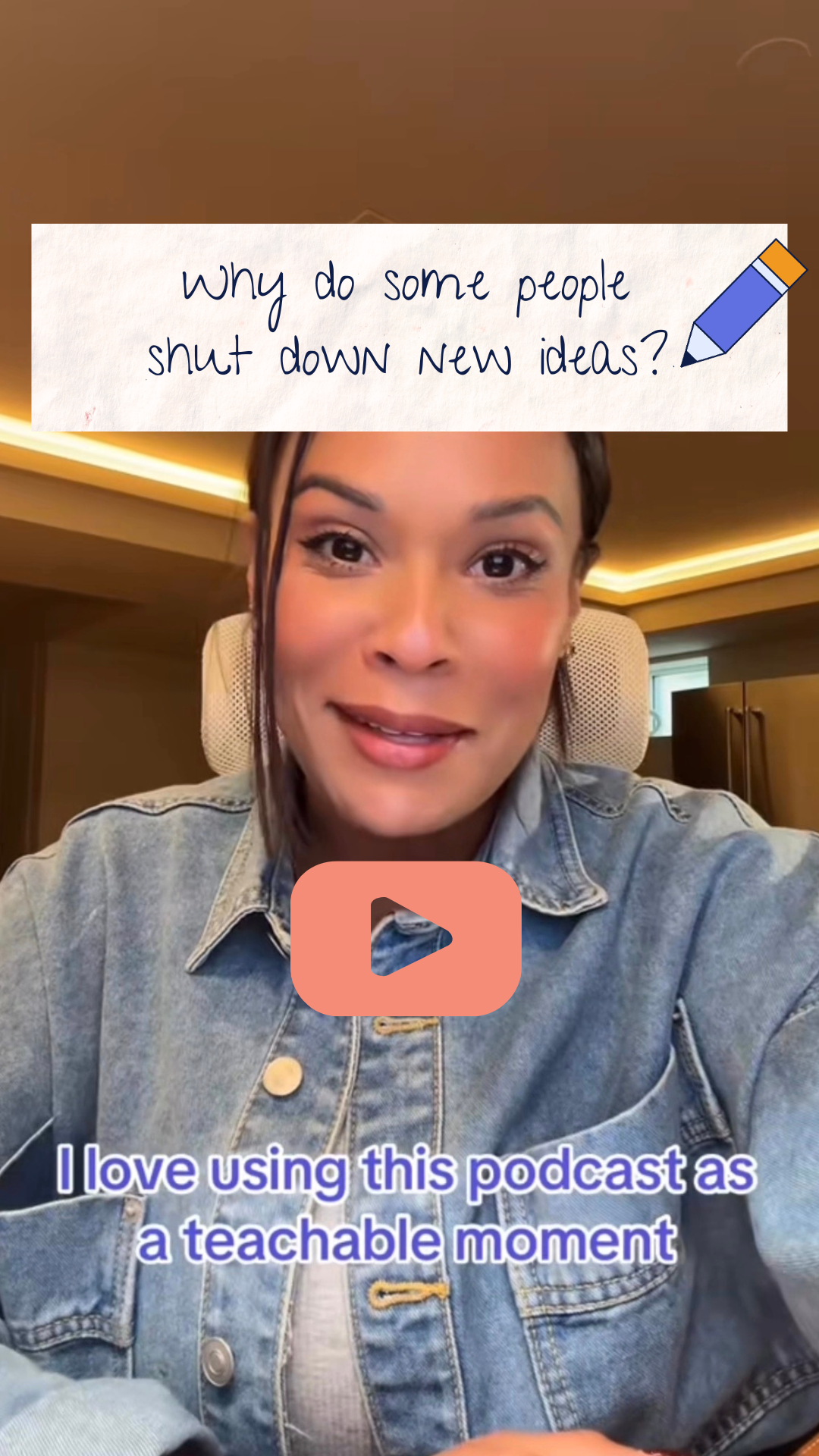
Follow me on TIKTOK or IG for more videos like these.
Let’s walk through what you just watched.
the moment beneath the moment
Marc hears “free buses” and doesn’t flinch. He gets curious.
He slows the conversation down. His body has room for the unknown.
When Ish hears the same phrase, you can feel his system snap into place.
Not aggressively, just decisively.
Marc asks a simple question when he meets Ish's resistance to the idea: “How is he proposing to do it?”
Ish reveals he doesn't know the plan. He just doesn’t think it can happen. And to him, that’s enough.
That contrast is important.
Because you’re not watching a debate about transit.
You’re watching two different relationships to uncertainty.
One person leans toward possibility.
The other reaches for stability.
They are both displaying their training.
Some people were raised in environments where questions were allowed to sit on the table for a while.
Others learned early that the safest place to be is certain, even if the certainty is wrong.
And the body remembers that.
where the wiring shows up
For some people, a new idea is just information.
For others, a new idea is a disruption.
A disruption to what they know.
A disruption to the story that keeps the world making sense.
A disruption to the internal scaffolding they use to organize reality.
When that scaffolding shakes, the mind reaches for anything that feels familiar.
So “free buses” doesn’t land as a policy idea.
It lands as a threat to the logic they've been taught to trust.
Not because the buses are scary—because uncertainty is.
the comment section became its own classroom
When I posted my analysis, the comments revealed the same patterns.
Some people took it in with ease.
Not because they agreed with everything, but because the idea didn’t activate a threat response. Their imagination stayed open long enough to consider the frame.
Then there were the people who expanded the conversation beautifully.
These were my favorite.
Someone pointed out that New York has already had free transit:
after the 2003 blackout, after Sandy, during COVID.
Another person wrote:
“We’re about to have the first trillionaire in the world in the U.S. Why can’t people fathom free buses?”
That’s the kind of question that rearranges the room.
It forces you to notice the absurdity we’ve normalized:
infinite wealth for one person feels reasonable, but collective ease feels unrealistic.
That’s conditioning.
And then there were the comments that looked like practicality on the outside but carried a quiet anxiety underneath:
What about maintenance?
What if people take advantage?
Who pays when things break?
These aren’t bad questions.
They’re just the first questions people reach for when their imagination meets a wall.
When you’ve been trained in scarcity—at home, at work, in culture—ease feels suspicious.
Comfort feels earned, not designed.
Resources feel finite, even when the math says otherwise.
Scarcity teaches the body to brace.
So bracing becomes the mind’s default posture.
why free buses hit such a nerve
Look at what the idea asks you to do.
It asks you to imagine that public resources can flow toward the public.
It asks you to imagine that ease doesn’t always have to be purchased.
It asks you to imagine that something as ordinary as getting to work doesn’t have to be a financial negotiation.
For a lot of people, that’s an identity shift.
If you’ve spent your whole life believing comfort must be earned, then a world where ease is simply available can feel destabilizing.
It rearranges the story of how the world works.
And the story you live inside shapes everything.
That’s why people accept trillionaires without blinking, but panic at “free.”
We’ve been conditioned to imagine abundance when it benefits one person, and scarcity when it benefits many.
Our imagination bends upward, not outward.
what this reflects back to you
Free buses are just the surface.
The deeper question is how you respond when your worldview is asked to stretch.
Do you get curious?
Do you get still?
Do you get anxious?
Do you reach for rejection the second discomfort arrives?
Your imagination tells on you long before your opinions do.
The moment you hit an idea that asks you to expand, your body will show you whether you’ve been trained in possibility or in self-protection.
Neither is morally superior.
But only one allows a new world to be built.
And if you slow down long enough to notice which one shows up in you, you’ll learn more about your mind than any debate about bus fares could ever reveal.
The same "who will pay for it?" shows up when you think about asking for a raise, setting boundaries, or proposing something new at work.
If this stirred something in you, or gave you language for something you’ve been feeling, follow me on TIKTOK or IG for more videos like these.
We unpack moments like this in real time, not because the topics are trendy, but because they reveal something deeper about how we think, relate, and build what comes next.