
what leaders build when they can't feel
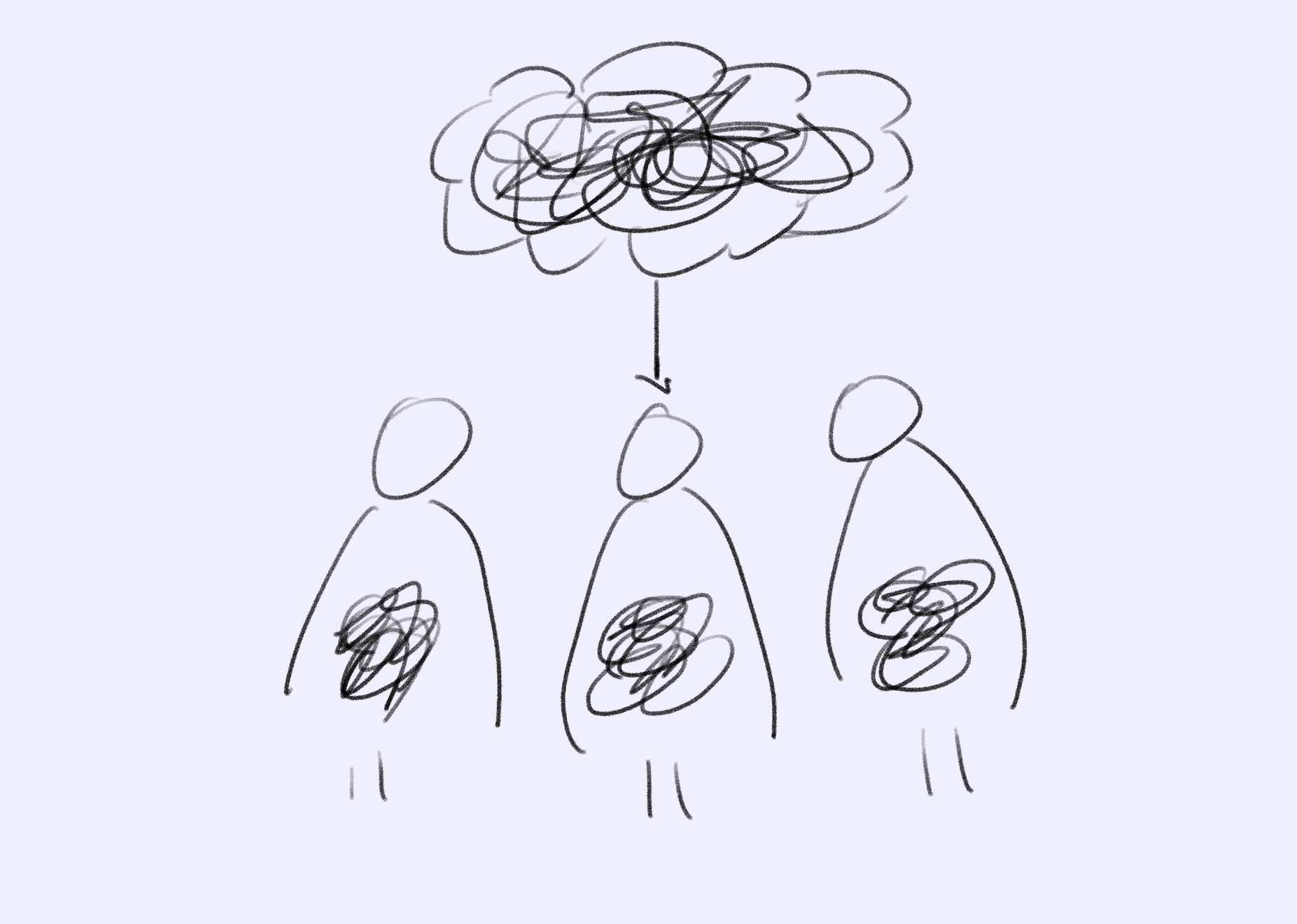
Every leader builds a room. The room is a replica of what they can tolerate inside themselves.

I have spent years inside organizations as an outside observer. Close enough to feel the weather. Far enough to name it. And I have learned to read one signal faster than any other.
Watch whether a team ever disagrees with its leader in the room.
Not privately. Not in the hallway after. In the room. In the meeting. In the moment when disagreement would be the right response.
Those teams have learned, through repetition, what the room will and will not hold. Nobody posted the rule. Nobody announced the consequence. The body of the person at the front of the room taught it, over months, over years, through a hundred small moments of what happened when something landed that the leader could not receive.
The room is a nervous system made structural. And the nervous system that built it belongs to the person with the most power.
Every leader builds a room. The room is a replica of what they can tolerate inside themselves.
The mechanism is precise.
When a leader's body cannot hold grief, the room stops making space for loss. When a leader's body cannot hold anger, the room stops making space for honesty. When a leader's body cannot hold not-knowing, the room stops making space for the questions that would require admitting it.
The room doesn't announce these rules. The body of the person with the most power keeps broadcasting, through what they respond to, what they redirect, what they receive and what they deflect. Every other body in the room reads that broadcast before language arrives. And adjusts.
That adjustment is the room being built. In real time. Repeatedly. Until the adjustment becomes the room's permanent weather. The felt story everyone inside it lives by, regardless of what the stated story on the wall claims.
Watch what a leader's body does when something they cannot hold enters the room.
Some leaders yell. The room learns that way too. But the leaders who are hardest to read are the ones whose bodies barely move. A slight stillness. A redirect. A voice that stays even when staying even is the hardest thing. The body says what the mouth never does.
Every body in the room felt it. And the next time the same truth approaches the surface, those bodies will make the calculation before the words form. Not consciously. The room already taught them where the line is.
This is how a leader's interior becomes a room's law without a single conversation about it.
The felt story is what the leader's body actually cannot hold. The stated story is what the organization says it believes. The felt story runs the room. The stated story stays on the wall. The gap between them is what everyone inside that room lives inside every day.
And the gap is specific to what the leader carries.
A leader carrying unprocessed fear builds a room that micromanages. A leader carrying unprocessed hurt builds a room that runs cold. A leader who cannot tolerate uncertainty builds a room where nobody brings problems, only answers, shaped to protect the leader's limits. A leader who cannot tolerate shame builds a room where honesty becomes the most expensive thing you can offer.
The behavior in the room is a precise map of what the person at the top cannot yet face. The room is the diagnosis. If you want to know what a leader is carrying, don't ask them. Watch what their room will not allow.
Sometimes the pattern runs without intention. Sometimes it doesn't. The room gets built either way.
Some of the most damaging rooms I have been inside were run by people who genuinely believed in the values on their walls. Who would have been horrified to learn what their body was building around them. Who thought their composure was a gift to the people they led.
Composure is a gift when it is real.
When it is suppression wearing composure's face, it becomes the room's heaviest rule. Feel nothing visible, or pay the price of feeling it here.
The room cannot go beyond what the leader has done with their own interior. That is the ceiling. And every person inside that room will spend their best energy navigating the ceiling instead of working.
We are watching this mechanism operate at national scale right now. And right now it is easier to see than it has ever been.
Pete Hegseth is running a war. In the middle of it, his staff banned press photographers from his briefings. The photos were unflattering. Independent photographers were replaced with the Pentagon's own. The leader's team now controls every image of the leader during the war.
A nervous system that cannot tolerate seeing itself clearly built a room that ensures it never has to. The war is secondary. The image is primary. And every journalist, official, and institution watching that decision received the same signal every room sends. Here is what this body cannot hold. Adjust accordingly.
They have. Outlets that refused to agree not to publish what the government hadn't approved lost their access. Outlets that agreed kept it. The room now holds only the bodies that said yes in advance.
Watch the speed.
A senior government official sent Georgetown Law School a threatening letter. Before Georgetown could respond, the sanctions were already in place. He never waited to hear what they had to say.
That is the mechanism. When a nervous system cannot tolerate the space between wanting something and getting it, it moves before anyone can push back. The punishment arrives first. The reason comes after. By the time anyone can respond, the room's rule is already running.
When someone later tried to hold that official accountable, he called the accountability process partisan. The person who named the gap became the problem. That is how the room protects itself.
When the gap is named, who pays? Watch what happens right now, every week, and you already know the answer.
Now watch the rooms adjusting.
Universities are pulling language from their websites before anyone asks them to. Corporations are deleting inclusion statements they published two years ago. Law firms are pledging loyalty before they are approached. Government departments are restructuring before any directive arrives.
Nobody told them to. The room taught them.
Every body nearby is finding the shape the room requires, performing it, and calling it strategy.
The new government hiring process now asks applicants about their political loyalty, in writing, on the application. What the room used to teach through consequence is now printed on a form. The felt story has become the stated story.
A nervous system is running a country.
A body that cannot tolerate dissent builds a system that punishes it. A body that cannot tolerate complexity builds institutions that flatten it. A body that cannot tolerate being seen clearly bans the photographers during a war. And every body watching learns the rule before anyone says it out loud.
The mechanism is the same in every room at every scale. The team where no one disagrees with the leader. The family where one person's limits became everyone else's unspoken law. The organization where the gap between the stated story and the felt story is something every person inside it carries daily and no one says out loud.
Different scale. Same nervous system building the room.
Every leader builds a room. The question is what you are building yours from.
The room your body constructs through every moment of what you cannot receive, every redirect away from what you cannot hold, every time your steadiness was a wall instead of a floor, that is the room people are actually living in.
The people inside your room have already mapped those rules. They are moving through your interior every day without your permission or your awareness. What they bring you, what they say in the meeting, what truth they offer and what they swallow, all of it is shaped by what your body has taught them you can hold.
The country is the largest room. But it is not the only room you are building.
The only thing that changes a room is changing what the person with the most power in it can hold. That is the work no title gives you and no election delivers.
This essay has a practice. The practice turns insight into body-level change. It's available to subscribers. If this landed, the practice will take you further. 👇🏾