The leadership we were trained to follow
The system didn't fail to produce leaders. It produced exactly the ones it needed.

I have been quiet since December. Not for a lack of things to say, but because I was waiting for my body to find the floor beneath the noise of this year. This is the first of a series of essays on the architecture of our silence, and what it takes to break it. - Indi
People with the most power keep watching harm happen. And staying quiet.
People you know. People with titles and budgets and teams and influence. People who built careers on words like integrity and accountability and doing the right thing.
You watched it last night. A room full of elected officials sat composed in "protest." Only a few people actually disrupted. They were Black and Brown. The system will call them disruptive, unprofessional, extreme. It will call the others composed.
When the moment arrives, the moment where doing the right thing would cost them something, they go quiet. They calculate. They "monitor the situation." They wait for someone else to go first.
I used to think this was cowardice. I used to think they were choosing wrong over right and that the problem was character.
I don't think that anymore.
I think the problem is architecture.
Think about what it takes to get promoted in most organizations. In most political systems. In most institutions.
You learn to read the room. You learn which truths are safe and which ones cost you something. You learn to soften your language. You learn to translate your clarity into something the structure can absorb without reorganizing.
You learn when to speak and when to let the silence do the work.
You learn that the people who get ahead are not the ones who name harm. They're the ones who manage it. Who contain it. Who make sure it never reaches the people it would embarrass.
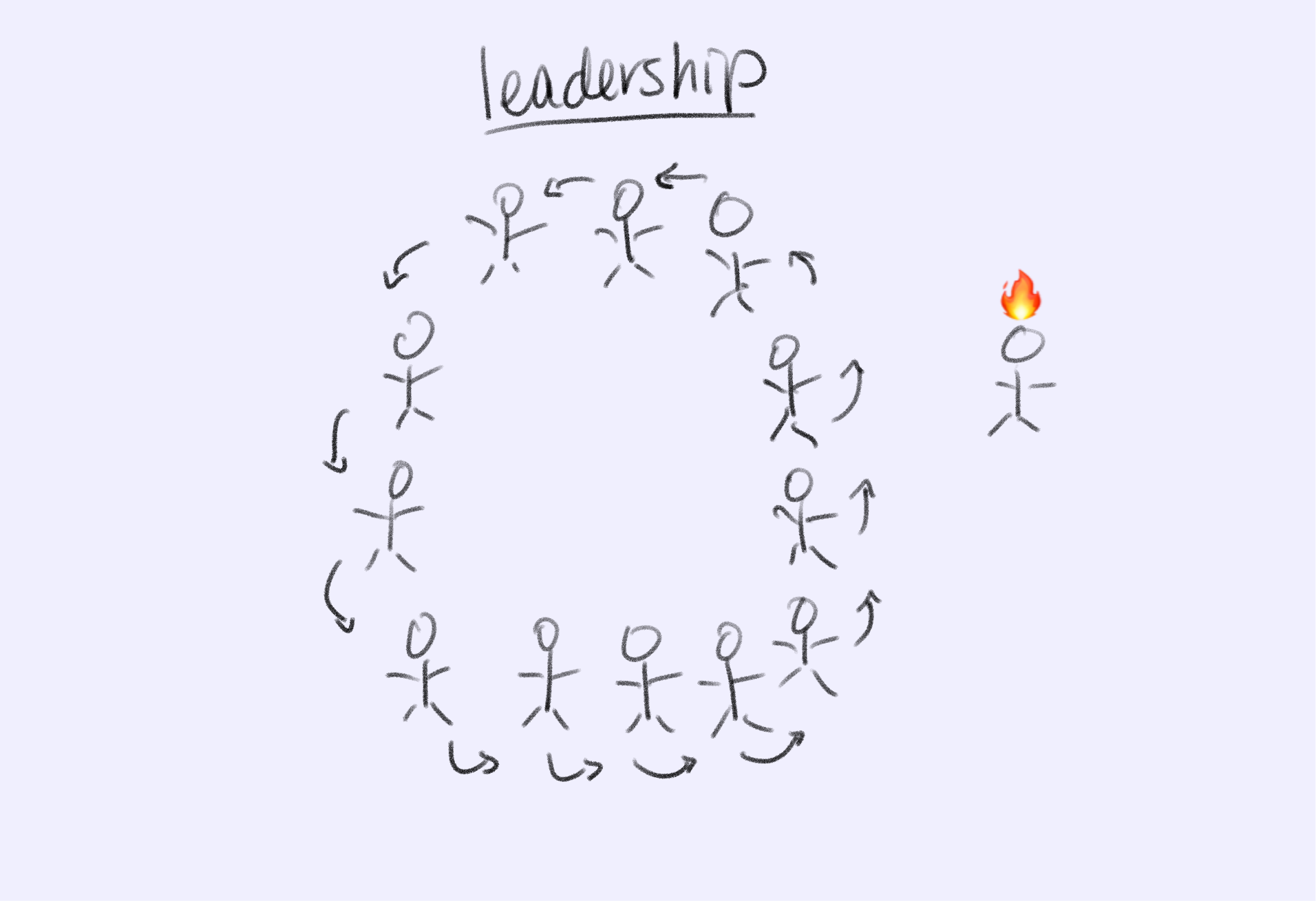
Every promotion is a filter. Every filter selects for the same thing. A nervous system that will prioritize the structure's survival over truth.
By the time someone sits at the top, they've been through decades of this filtering. They are not bad people. They are sorted people. Selected for a specific capacity. The ability to hold power without using it to disrupt the system that gave it to them.
That's not a leadership failure. That's a leadership feature. The system doesn't produce this by accident. A system that wants to survive builds leaders who will never threaten it.
I watched it happen to me in a single afternoon.
A company hired me to give a talk on inclusion. They set the terms. They chose the topic. They booked the room. They wrote the check. They wanted me to come in and talk about how to build more inclusive teams.
So I did.
I stood in front of the room and asked a question. A real one. I asked if inclusion was actually happening at the organization. Not theoretically. Not aspirationally. Right now, in the rooms where decisions get made.
The room got quiet. The kind of quiet where you can feel the temperature shift because someone with authority just got uncomfortable.
I kept going. Because that was the work. That was what they hired me to do.
Afterward, I got the email. Professional tone. Carefully worded. They were disappointed. They said I was presumptuous. That it was inappropriate for me to question whether inclusion was happening at their organization.
Read that again.
They hired me to talk about inclusion. Then told me I was out of line for asking if it existed.
That's the system working exactly as designed. They didn't want inclusion. They wanted the performance of inclusion. They wanted someone to stand in front of the room and say the right words so the organization could feel like it had done something without anything actually changing.
And the moment I treated the conversation like it was real, the system corrected me.
And I learned something about myself in that correction. Because part of me already knew. Part of me had been softening for years before that room. Reading the client's comfort level. Adjusting the temperature of my questions. Making my clarity digestible so the next contract would come. I needed to eat. The system always knows that.
That correction is the training.
The training is what happens every time someone treats a real question like a disruption. Every time someone's body tells them that clarity just became expensive. The training is the years of filtering that teach your nervous system one rule. Alignment equals safety. Disruption equals expulsion.
By the time a person reaches a position of real authority, the training is somatic. It's not a strategy anymore. It's a reflex. The body scans for threats to the structure and neutralizes them before the mind has time to ask whether the structure deserves protecting.
You've watched this reflex in real time.
You've been in the meeting where a leader heard something true and their body barely shifted. They paused. Made a note. Moved to the next agenda item. Their voice stayed even. And the room recalibrated around one unspoken message to the person who spoke: that will cost you. Don't do it again.
Nobody said it out loud. Nobody had to. The leader's body said it. And every other body in the room received it.
The leader wasn't being cruel. They were being trained. Their nervous system read the truth as a threat to the structure, and what came out looked like composure but functioned as suppression.
You know what this sounds like.
"We need to be strategic about this."
"Let's not get ahead of ourselves."
"I hear you, but the timing isn't right."
"We need to bring people along."
"Let's focus on what we can control."
"I don't disagree, but we need to be realistic."
Every one of these phrases sounds like wisdom. Every one functions as delay. And delay, inside a system that's causing harm, is participation.
The training didn't start in the boardroom. It started in the family. In the culture.
This is respectability politics doing what it was designed to do. The belief that composure is credibility. That calm is leadership. That disruption makes you unqualified. Respectability trains people to protect institutions before they protect people. And it punishes the ones who refuse.
It starts early. Every system you moved through taught you the same thing. If you keep things steady, you survive. If you disrupt, you get expelled.
By the time someone has the title, the training is identity. They're not choosing the structure over truth. They can't tell the difference anymore. Their identity fused with their role so completely that speaking up doesn't just risk their job. It risks who they believe themselves to be. And identity threats activate the nervous system faster than anything.
That's why they go quiet. Not because they don't see the harm. Because their body has already calculated that naming it would cost them the thing their entire identity is built around. Their position inside the system.
Now multiply that by every leader in every institution on the planet.
Look around.
Watch what's happening in politics. In corporations. In institutions. In media.
You are watching this pattern at scale. You are watching people with enormous power calculate the cost of truth and choose the structure every single time.
You are watching leaders "monitor" situations that require action. You are watching people who built their brands on integrity perform strategic silence while harm continues.
And you are watching the people who do speak get punished. Get called divisive. Get labeled difficult. Get managed, contained, and eventually expelled.
The system is showing you exactly what it was designed to do.
But there is another kind of leadership. It doesn't get trained. It doesn't get selected for. It rarely gets promoted. And when it shows up, the system treats it as a threat.
You know what it looks like because you've felt it.
You've been in a room where someone said the true thing. Not the strategic thing. Not the timed thing. The true thing. And the room changed. Not because everyone agreed. Because something in the air shifted from managed to real.
That person wasn't performing courage. Their body just wasn't available for the lie anymore. The cost of silence had gotten higher than the cost of speaking. And everyone in the room could feel it.
That kind of leadership requires everything the system trains out of you. Feeling the room contract around a truth and saying it anyway. Repairing harm instead of managing it. Holding power without letting the power hold you.
You don't need a title to be running this pattern.
You do it in your family when you manage the peace instead of naming the harm. You do it in your friendships when you soften your truth to keep the relationship comfortable. You do it at work when you know the decision is wrong and you let the meeting end without saying so.
Every time you choose the structure's comfort over your own clarity, you are practicing system-serving leadership. On yourself.
The system doesn't need you to believe in it. It just needs your behavior. And behavior that protects the structure at the cost of truth is not leadership. It's maintenance with a title.
The world is not short on people with power.
It is short on people whose power isn't owned by the system that gave it to them.
That kind of leadership will never come from the pipeline.
It will come from people who did the work the pipeline was designed to prevent.
This essay has a practice. The practice turns insight into body-level change. It's available to subscribers. If this landed, the practice will take you further. 👇🏾